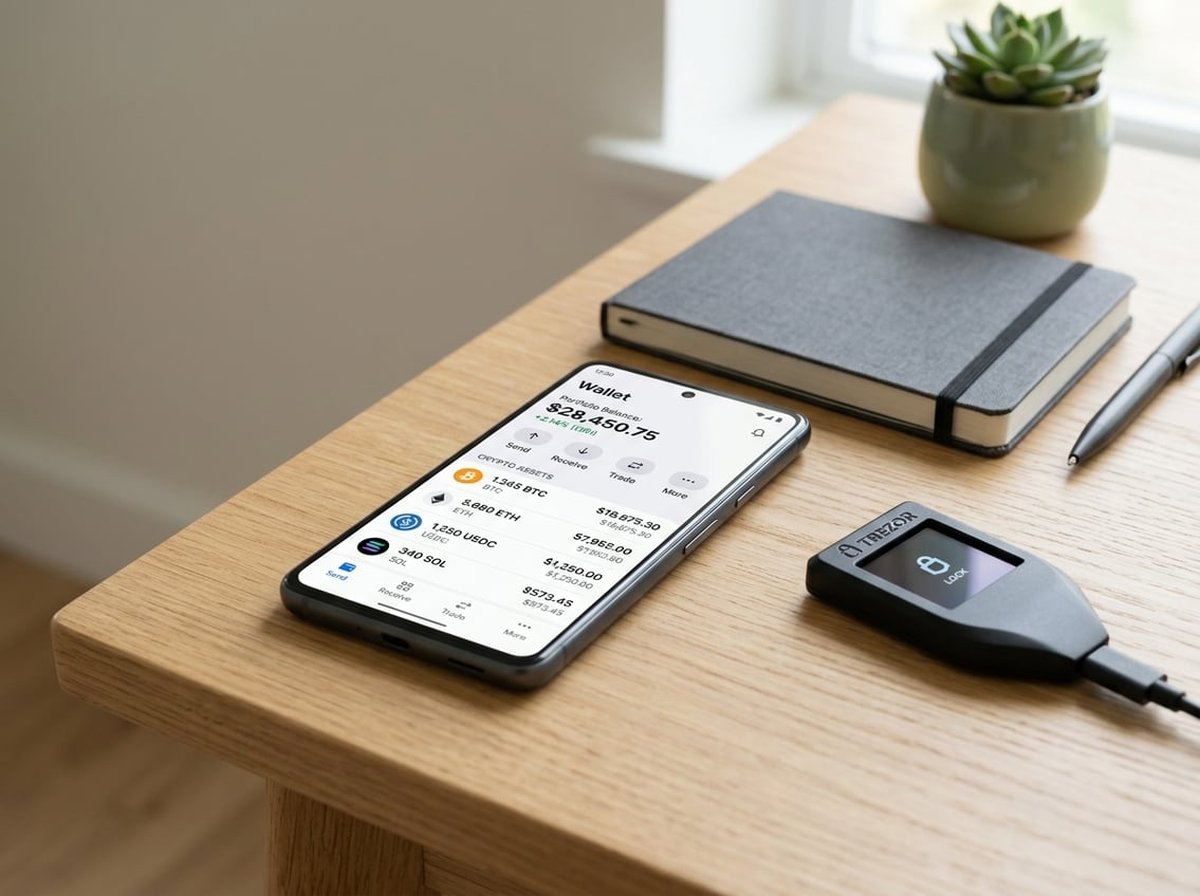
What "crypto casino" actually means
The term "crypto casino" gets used two different ways in the market, and the distinction matters. The narrower definition is a casino that operates natively in crypto — accepting deposits, holding player balances, and settling withdrawals entirely in cryptocurrency, with games priced in crypto or crypto-derived stable units. The broader definition is any casino that accepts crypto as one of several payment methods alongside fiat rails, with the actual game balance held in the operator's fiat account of choice.
Most Australian-facing operators fall into the broader category. They accept BTC, ETH, and typically two to four stablecoins on the deposit side, convert to fiat at the moment of deposit, and hold your balance in AUD or USD equivalents. When you withdraw, they convert back to whichever coin you request. The player experience feels like crypto but the operator's actual books are denominated in fiat.
Crypto-native operators are a smaller category but growing. These sites hold balances in crypto, price games in crypto units (typically small denominations like mBTC or satoshis), and never touch fiat rails at all. The player experience is different in specific ways — no fiat conversion friction on either end, no card processing fees baked into odds, and typically stronger anonymity than fiat sites can offer. The trade-off is exposure to the volatility of whatever coin you hold your balance in, unless the operator supports stablecoins for balance holding.
Chain choice and its trade-offs
The chain you use for deposit and withdrawal has practical consequences that vary substantially. The main options in 2026:
Bitcoin (BTC). The original crypto rail, still supported everywhere. Settlement time depends heavily on network fees at the moment — a low-priority Bitcoin transaction can take an hour or more; a high-priority one settles in ten to twenty minutes. Transaction fees vary from a few dollars to occasionally over twenty during network congestion. Bitcoin is the safe default but rarely the fastest or cheapest option.
Ethereum (ETH). The primary smart-contract chain, supported at essentially every crypto casino. Confirmation times are faster than Bitcoin (usually under five minutes for standard priority) but gas fees have historically been higher, particularly during network congestion. Post-Merge and Layer-2 scaling has improved the fee picture substantially versus 2022.
Stablecoins on Ethereum (USDT, USDC). The dominant choice for players who want to eliminate volatility exposure. USDT and USDC are pegged to USD and settle within Ethereum's confirmation windows and gas costs. Most crypto casinos support at least one stablecoin, and this has become the default for the majority of crypto casino deposits at Australian-facing operators.
Fast Layer-2 chains (Polygon, Arbitrum, Optimism). These L2s settle in seconds with fees measured in cents. Not universally supported at Australian-facing operators, but the ones that do support them offer meaningfully better economics for micro-stakes crypto play. This is where the innovation has concentrated over the past two years.
Alternate Layer-1 chains (Solana, Tron, BNB Chain, Avalanche). Sub-second confirmation times, very low fees, and growing support. Solana in particular has become common at newer crypto casinos because its economics work well for high-frequency, low-value transactions.
Lightning Network for Bitcoin. Increasingly common at Bitcoin-native casinos. Enables near-instant Bitcoin transactions at near-zero fees. Not universal but present at higher-quality operators.
The practical takeaway is that Bitcoin is the safe default; stablecoins on Ethereum are the modal choice for players who want stability; L2s and alternate L1s are the fast/cheap choice for players who understand the trade-offs. Chain choice is more consequential than most players realise — the same casino can be a good or bad experience depending on which rail you route through.
Wallet integration in practice
Depositing crypto at a casino follows the same basic pattern across chains: the casino generates a unique deposit address, you send funds to that address from your wallet, the casino watches the chain for the transaction, and the balance credits after the required number of confirmations. What varies is the friction in each step.
The best wallet integrations offer QR code display for easy mobile scan, real-time transaction monitoring with a visible confirmation counter, clear fee guidance for the chain being used, and support for multiple chains without requiring separate account setup for each. Poorer integrations show a plain address string, require manual refresh to check confirmation status, provide no fee guidance, and force you to switch account contexts to use a different chain.
For withdrawals, the operator either sends from a hot wallet (fast but with lower per-transaction limits) or from a cold wallet (slower but supporting larger amounts). Well-designed sites are transparent about which is happening and set expectations accordingly; poorly-designed sites give you a generic timeline that doesn't match observed behaviour.
A useful test for any crypto casino before making a significant deposit is a small test transaction — deposit an amount small enough not to matter, play through it, and withdraw. This exercises the full round trip and reveals any operator-side friction that isn't obvious from the marketing.
Provably fair, actually explained
Provably fair is the most technically distinctive feature of crypto casinos and is often marketed heavily without being explained clearly. The core mechanism is a cryptographic commitment scheme applied to game outcomes.
Before each round begins, the casino generates a random server seed and publishes a hash of that seed. The hash is a cryptographic fingerprint — anyone can verify what seed produces it, but no one can derive the seed from the hash. When you play the round, your bet includes your own client seed, which combines with the server seed and a nonce (round counter) to produce the outcome via a deterministic formula. After the round, the server seed is revealed, and any player can independently verify that (a) the revealed seed matches the pre-committed hash, and (b) the outcome matches what the formula produces from the seed inputs.
The property this delivers is verifiable fairness without trust. You don't need to trust that the casino's RNG is honest, or that its audits are current, or that its game code hasn't been modified. You can check each round yourself. This is a materially stronger property than traditional audited RNG offers, and it's the reason serious crypto players prefer provably fair games where they're available.
The catches are practical rather than mathematical. First, provably fair only works if you actually check — and most players don't. Second, it applies to the outcome derivation but not necessarily to every element of the game (some provably fair implementations don't extend to features like bonus round triggers). Third, the technical understanding required to verify is real; players who want the property but don't want to learn the verification steps get less protection than the mechanism formally offers.
Every casino that offers genuinely provably fair games publishes verification instructions and code snippets that let you check outcomes yourself. If those aren't accessible, the "provably fair" claim is marketing without substance.
Volatility management
Playing crypto casino games in BTC or ETH means holding a balance that can move meaningfully in dollar terms between deposit and withdrawal. A 5% swing in the underlying asset over the course of a session is normal; a 20% swing over a week is not unusual; larger swings happen occasionally. This is a real economic exposure separate from the game outcomes themselves.
The straightforward solution is to play in stablecoins where possible. USDT and USDC are supported at essentially every crypto casino serving Australian players, and holding a balance in stablecoins removes the volatility exposure entirely. The trade-off is that you lose any upside from holding an appreciating asset while you play — which is a real cost if you're a long-term believer in the underlying crypto, but not a concern for most casino players who are playing recreationally.
Some casinos offer automatic conversion to stablecoins on deposit and back to the deposit coin on withdrawal, at published exchange rates. This is worth using if you're depositing in a volatile coin because the operator can do the conversion at scale better than you can at retail. Others force you to hold whatever coin you deposited, which is worth knowing before you deposit.
Regulatory and tax considerations
Cryptocurrency in Australia is treated as property for tax purposes, not currency. This has specific implications for crypto casino play. Deposit and withdrawal transactions involving crypto can trigger capital gains events, meaning the tax picture is more complex than for fiat play even if the underlying gambling activity is treated the same.
For recreational players, gambling winnings themselves generally fall outside the income tax base. The complication is the crypto asset movements: converting AUD to BTC to deposit, then withdrawing BTC and converting back to AUD, creates a chain of capital gains events on the underlying asset. If the crypto price moved during the session, this can create real tax exposure independent of whether you won or lost at the games.
Stablecoins reduce but don't eliminate this issue — even USDT and USDC technically create disposal events at each conversion, though the price movements are typically negligible.
For anyone playing at significant volume, the tax reporting overhead of crypto casino activity is real and worth planning for. Keeping transaction records — deposit addresses, amounts, coin prices at the moment of transaction — is essentially unavoidable for meaningful volume, and consulting a tax agent who understands both gambling and crypto treatment is a worthwhile investment.
Selecting a crypto casino
The site-selection criteria for a crypto casino overlap substantially with those for any online casino australia operator, but with some additional considerations specific to crypto:
- Licence quality still matters. A Malta-licensed crypto casino provides substantially stronger player protection than an Anjouan-licensed one, regardless of the technology stack.
- Chain support depth. Sites supporting multiple chains and stablecoins give you flexibility; sites supporting only Bitcoin are limiting.
- Provably fair implementation, actually. Look for verification tools and published algorithms, not just a "provably fair" logo.
- Withdrawal automation. Well-run crypto casinos process most withdrawals automatically without human review; sites that manually approve every withdrawal add latency that shouldn't exist for verified accounts.
- Deposit and withdrawal fees. Some crypto casinos charge fees on top of network fees; the most transparent pass through network fees only.
- Balance denomination options. Sites that let you hold your balance in stablecoins regardless of deposit coin offer better volatility management than sites that force the deposit coin.
Where crypto casinos sit versus fiat
Neither payment approach is universally better. Crypto casinos offer faster settlement, stronger privacy, provably fair games where implemented, and independence from Australian banking rails. Fiat casinos offer easier onboarding for players not already holding crypto, no volatility exposure, familiar dispute mechanisms through card issuers where applicable, and simpler tax treatment.
Players already comfortable with crypto self-custody get the most benefit from crypto casino play. Players new to crypto face a real learning curve — wallet setup, seed phrase management, chain selection, gas fee understanding — that adds friction on top of the site-selection question. For that group, staying with fiat rails (especially PayID) is often the higher-value choice regardless of what a crypto casino might offer technically.
The most important observation is that operator quality dominates payment method quality. A well-run crypto casino with a Malta licence and mature product design is a better experience than a poorly-run fiat casino with an Anjouan licence and weak infrastructure. The reverse is also true. The online casino australia selection framework — licence, payments, UX, complaint history — applies to crypto operators the same way it applies to any other, with crypto being one payment dimension among several rather than a substitute for the broader analysis.
For players newer to crypto specifically, the on-ramp from a mainstream fiat exchange (CoinSpot, Independent Reserve, Binance) to a wallet to a casino deposit is a three-hop process that carries its own friction and its own costs. Those costs are worth accounting for when comparing to a direct PayID deposit at a fiat online casino australia site — the crypto route can be faster once you're set up but adds meaningful setup overhead if you're not.
Frequently asked questions
Do I need to use a hardware wallet to play at a crypto casino?
Not for typical session amounts. Software wallets like MetaMask, Trust Wallet, or exchange-based wallets work fine for depositing and withdrawing typical amounts. For larger balances that you'd hold long-term, a hardware wallet is standard security practice, but you can move funds from hardware to software wallet for specific casino sessions and back afterward.
Is crypto casino play more anonymous than fiat?
Somewhat, but not as much as marketing sometimes implies. Deposit and withdrawal transactions are pseudonymous on-chain, which is stronger privacy than card or bank transactions carry. But casinos still run KYC on withdrawals at all reputably-licensed operators, and Australian tax obligations still apply to any capital gains on the underlying crypto. True anonymity is not on offer at any reputable casino, crypto or fiat.
Which chain is fastest for casino deposits and withdrawals?
Solana, Tron, and Layer-2 chains (Polygon, Arbitrum) settle in seconds at fees measured in cents. Bitcoin Lightning is comparably fast where supported. Ethereum mainnet takes minutes; Bitcoin mainnet takes ten to sixty minutes depending on fees. If speed is the priority, the alternate chains are meaningfully better than the majors.
Are crypto casino winnings taxed in Australia?
The gambling winnings themselves generally fall outside the income tax base for recreational players. The crypto asset movements involved in deposit and withdrawal can trigger capital gains events on the underlying asset, which is a separate tax consideration. Consult a registered tax agent who understands both gambling and crypto treatment if the amounts are material.